Chapter 9 — Email Etiquette
Introduction
Email writing is a crucial professional communication skill used in academic, corporate, and personal settings. It enables clear, concise, and effective exchange of information while maintaining a professional tone. In this module, we explored the key components of effective email writing, including proper structure, subject lines, greeting and closing etiquette, clarity in messaging, and adapting tone for different recipients. Mastering email writing helps ensure that messages are understood, actionable, and leave a positive impression on colleagues, clients, and supervisors.
Overview
Effective email writing = clear subject, correct greeting, focused body, and polite closing. Keep it short, specific, and professional. Use your official account and a complete signature.
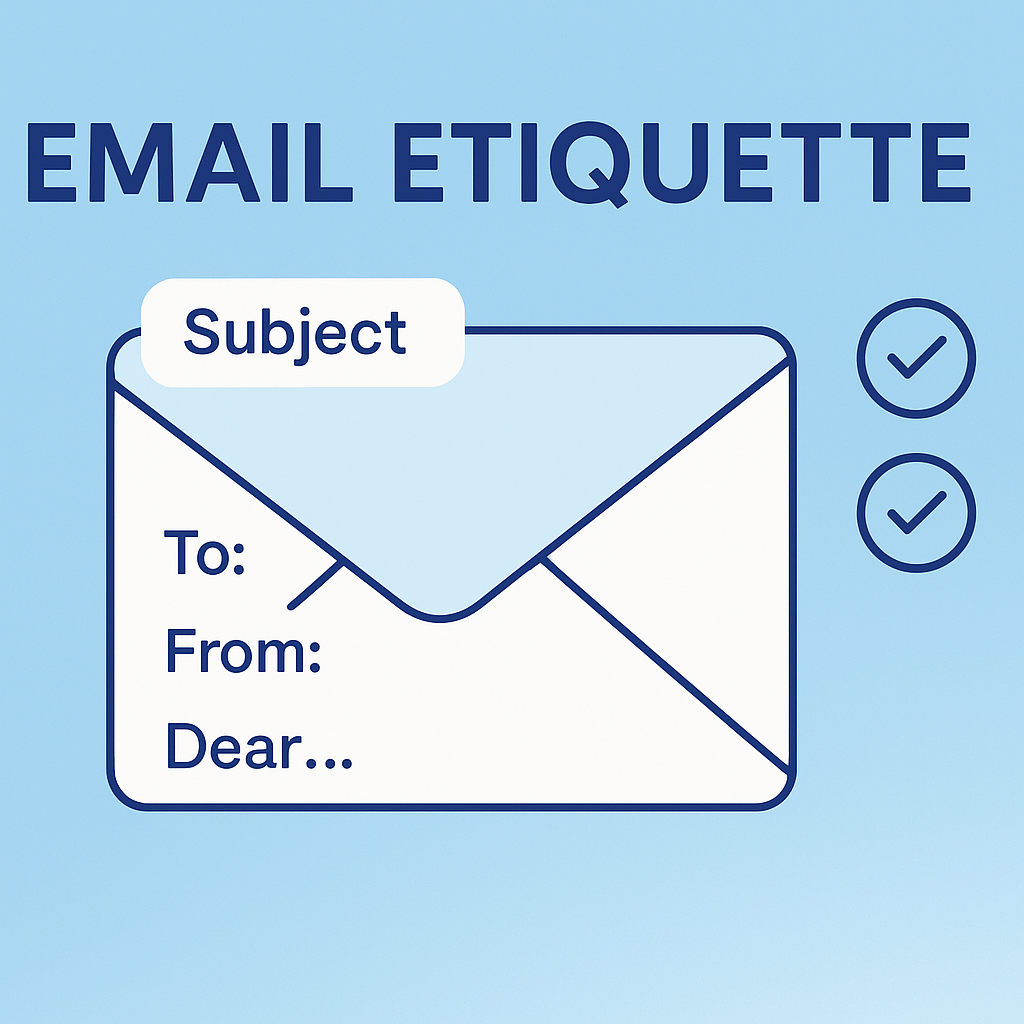
Anatomy of a Professional Email
- Subject: one clear line with keywords (no greetings).
- Greeting: Dear Professor/Dr./Mr./Ms. + Last Name.
- Body: 1–3 short paragraphs. Context → request → next steps.
- Closing: Kind regards / Best / Sincerely.
- Signature: Full name, program/role, org, phone/links.
Subject Line
Be clear and specific about the topic of the email. The subject line should be the main point of the email.
- Interview follow-up — Software Intern
- Request: feedback on CV by 10/05
- Appointment request to discuss Project X
- Examples: Meeting request: Project X (Tue/Thu afternoon), Assignment clarification — CS102 — due 14/05
Greetings
Formal Greetings
- Do not include casual greetings such as "hello" or "hi." Use the following for formal communication:
- Dear + Recipient’s Title + Last Name
- To Whom It May Concern
- Greetings
- Dear [Department/Team Name]
Semi-Formal / Professional Greetings
- Hello [Name]
- Hi [Name]
- Good Morning [Name]
- Good Afternoon [Name]
- Good Evening [Name]
Examples
- Dear Professor Gordon
- Dear Mr. Manoj
- Dear Ms. Gayan
- To Whom It May Concern
- Dear Marketing Team
Closings
Formal / Acceptable Closings
- Sincerely
- Best regards
- Kind regards
- Yours faithfully
- Yours sincerely
Semi-Formal / Professional Closings
- Best
- Regards
- Thank you
- Thanks and regards
- Warm regards
Informal / Friendly Closings (Use Carefully)
- Cheers
- Thanks
- All the best
- Take care
Tone
- Polite and respectful – Use courteous language and show respect.
- Professional – Avoid slang or casual language; keep it formal.
- Clear and concise – Be direct but respectful, without unnecessary detail.
- Non-demanding – Make requests gently, not as commands.
- Grateful – Always thank the recipient for their time or help.
- Ask, don’t demand: use modals (would you mind…, would it be possible…).
- Offer options when requesting meetings (two or three timeslots).
- Explain context and deadlines briefly; be specific about the help you need.
Handy Templates (Short)
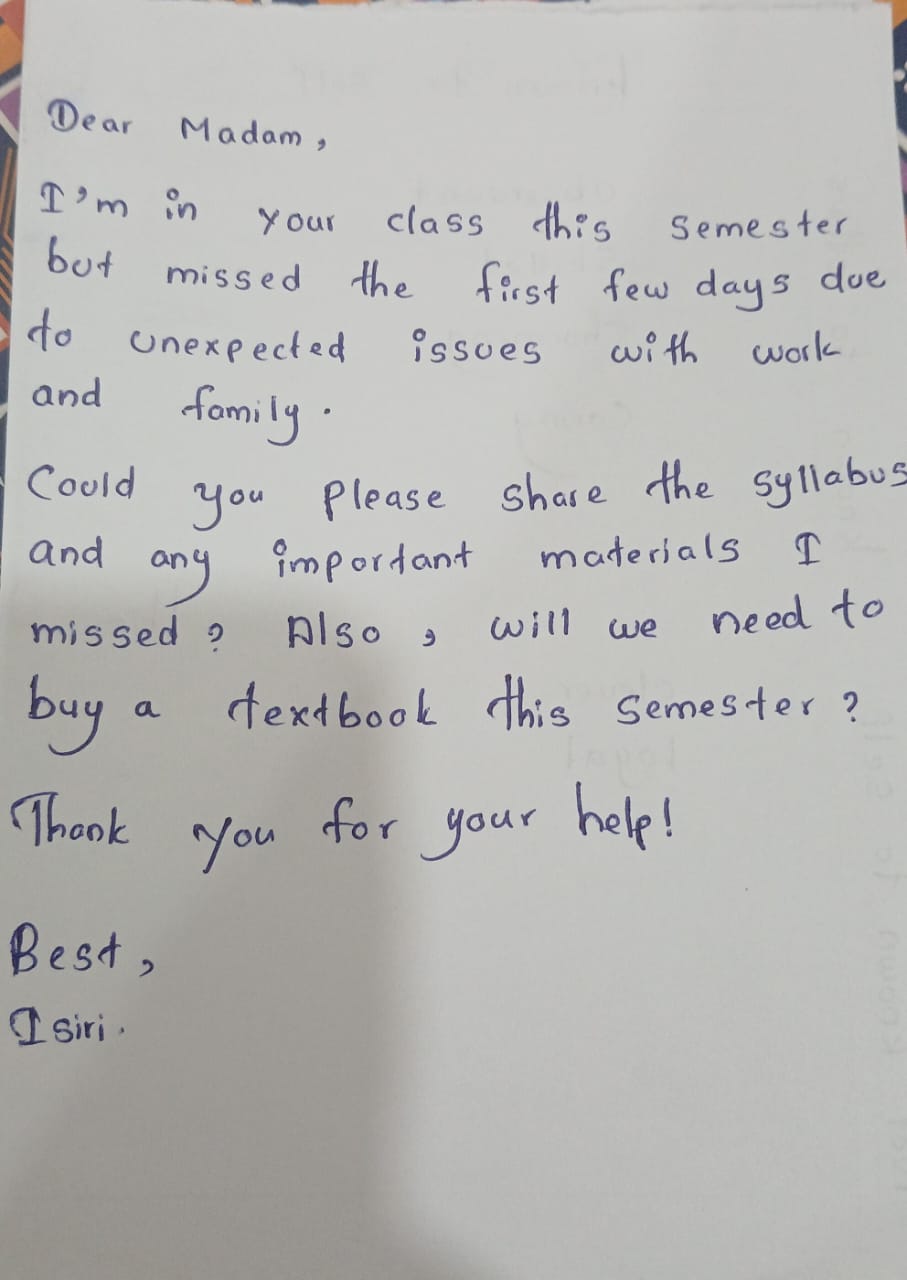
- Absence/Late: “Subject: [Course] [Date] — I’m writing to let you know I will be late/absent due to [brief reason]. I’ve checked notes; may I meet to clarify [X]?”
- Appointment: “Would it be possible to meet this week to discuss [topic]? I’m free Tue/Thu afternoon or Fri morning.”
- Request/Favor: “If you have time, would you mind reviewing my [document]? I’m especially unsure about [X].”
Before You Hit 'Send'
- Check name and greeting
- Use proper tone and language
- Review spelling and grammar
- Include a subject line and closing
- Read carefully and answer fully
- Be calm
- Reply appropriately
After You Hit 'Send'
- Emails are not for time-sensitive issues
- If sent after 5pm or on weekends, expect a response when the recipient returns
- If you asked for assistance, a follow-up email may be necessary
Glossary & Notes
- ASAP = as soon as possible; FYI = for your information; COB = close of business (5pm); RSVP = please reply.
- Avoid multiple exclamation marks in professional emails; keep tone measured.